


MASX WORLD
Lunar New Year in China: Traditions, Celebrations, and How Visitors Can Join the Festivities
If you happen to be in China anytime between late January and mid-February, you may notice something magical in the air.
Streets glow red, fireworks echo in the distance, families travel across the country, and everyone seems to be preparing for something big.
That “something” is Lunar New Year, also known as Chinese New Year or Spring Festival — the most important and widely celebrated holiday in China.
More than just a countdown to a new year, Lunar New Year is a celebration of family, renewal, luck, and fresh beginnings. For travelers, it’s also one of the most immersive cultural experiences China has to offer.
What Is Lunar New Year?
Lunar New Year marks the beginning of the year based on the traditional Chinese lunar calendar, not the Gregorian calendar. Each year is associated with one of the 12 Chinese zodiac animals, such as the Dragon, Tiger, or Rabbit, which are believed to influence personality traits and fortune.
The festival usually lasts 15 days, starting on New Year’s Eve and ending with the Lantern Festival. While modern life has shortened official public holidays, the cultural celebrations run deep and wide.
A Brief History of the Festival
Lunar New Year dates back over 3,000 years, originating from ancient agrarian rituals. Early celebrations were linked to honoring ancestors, praying for good harvests, and warding off evil spirits.
One famous legend involves a mythical beast called Nian, which was said to terrorize villages at the start of the year. People discovered that Nian feared loud noises, bright lights, and the color red — which is why fireworks, firecrackers, and red decorations are still central to Lunar New Year celebrations today.
How Locals Celebrate Lunar New Year
1. Family Reunions Come First
Lunar New Year is all about family. Millions of people return to their hometowns for New Year’s Eve dinner, making it the largest annual human migration in the world. Trains, airports, and highways fill up days before the holiday.
The reunion dinner is the most important meal of the year, symbolizing togetherness, abundance, and unity.
2. Red Everywhere
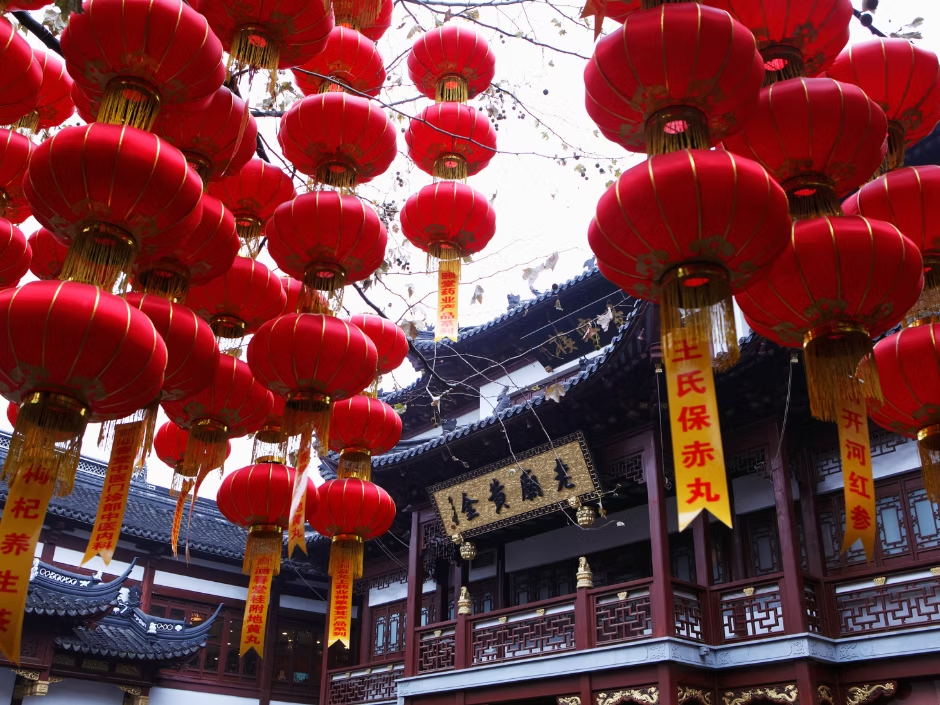
Red represents luck, happiness, and protection, so it dominates the season. Homes, streets, and shops are decorated with:
· Red lanterns
· Spring couplets with auspicious phrases
· Paper cuttings and New Year posters
You’ll also see red envelopes, known as hongbao, filled with money and given to children and younger relatives for good fortune.
3. Fireworks and Lion Dances
Fireworks are set off to scare away bad luck and welcome prosperity. In many cities and towns, you’ll also see lion and dragon dances, performed to the beat of drums and cymbals, especially outside shops and temples.
4. Traditional Foods with Meaning
Food during Lunar New Year is symbolic:
· Dumplings resemble ancient gold ingots and represent wealth
· Fish symbolizes surplus and abundance
· Rice cakes (nian gao) represent growth and progress
Every dish tells a story — and nothing is chosen by accident.
What Happens During the 15 Days?
Each day of Lunar New Year has traditional meanings, from welcoming household gods to visiting relatives and honoring ancestors. The celebration ends with the Lantern Festival, when glowing lanterns fill the night sky and families gather once more.
Experiencing Lunar New Year as a Visitor
Yes — tourists can absolutely enjoy Lunar New Year, and it can be unforgettable if you know what to expect.
Best Places to Experience Lunar New Year in China
· Beijing – Temple fairs, historic celebrations, traditional performances
· Shanghai – Modern celebrations mixed with heritage events
· Xi’an – Cultural shows and lantern displays near ancient city walls
· Guangzhou – Flower markets and lively street celebrations
· Hong Kong – One of the most visitor-friendly Lunar New Year experiences with parades and fireworks
Tips for Travelers
· Book early: Transportation and accommodation sell out fast
· Expect closures: Some shops and attractions close during the first few days
· Join public celebrations: Temple fairs and lantern festivals are open to all
· Be respectful: This is a deeply family-focused holiday
If you’re invited to a local celebration, it’s considered polite to accept — it’s a sign of trust and warmth.
Why Lunar New Year Is Worth Experiencing
Lunar New Year isn’t just something you watch — it’s something you feel. It’s in the sound of fireworks, the warmth of shared meals, the glow of lanterns, and the collective pause as a country welcomes a new beginning.
For visitors, it offers a rare chance to see China at its most human: family-centered, symbolic, joyful, and deeply rooted in tradition.
LIVE ULTIMATE XPERIENCES (L.U.X.) IN CHINA!
Go visit our website! China: MYSTIQUE AND INTRIGUE

1 Comment
kkk